 Baltimore Orioles Hawaiian Shirts
 Boston Red Sox Hawaiian Shirts
 Chicago Cubs Hawaiian Shirts
 Chicago White Sox Hawaiian Shirts
 Cincinnati Reds Hawaiian Shirts
 Cleveland Guardians Hawaiian Shirts
 Colorado Rockies Hawaiian Shirts
 Detroit Tigers Hawaiian Shirts
 Houston Astros Hawaiian Shirts
 Kansas City Royals Hawaiian Shirts
 Los Angeles Angels Hawaiian Shirts
 Los Angeles Dodgers Hawaiian Shirts
 Miami Marlins Hawaiian Shirts
 Milwaukee Brewers Hawaiian Shirts
 Minnesota Twins Hawaiian Shirts
 New York Mets Hawaiian Shirts
 New York Yankees Hawaiian Shirts
 Oakland Athletics Hawaiian Shirts
 Philadelphia Phillies Hawaiian Shirts
 Pittsburgh Pirates Hawaiian Shirts
 San Diego Padres Hawaiian Shirts
 San Francisco Giants Hawaiian Shirts
 Seattle Mariners Hawaiian shirts
 St. Louis Cardinals Hawaiian Shirts
 Tampa Bay Rays Hawaiian Shirts
 Texas Rangers Hawaiian Shirts
 Toronto Blue Jays Hawaiian Shirts
 Washington Nationals Hawaiian Shirts
 Arizona Diamondbacks Hawaiian Shirts
 Atlanta Braves Hawaiian Shirts
 Alabama Crimson Tide Hawaiian Shirts
 Arizona State Sun Devils Hawaiian Shirts
 Arkansas Razorbacks Hawaiian Shirts
 Army Black Knights Hawaiian Shirts
 Auburn Tigers Hawaiian Shirts
 Baylor Bears Hawaiian Shirts
 BYU Cougars Hawaiian Shirts
 California Golden Bears Hawaiian Shirts
 Clemson Tigers Hawaiian Shirts
 Coastal Carolina Chanticleers Hawaiian Shirts
 Colorado Buffaloes Hawaiian Shirts
 East Carolina Pirates Hawaiian Shirts
 Florida Gators Hawaiian Shirts
 Florida State Seminoles Hawaiian Shirts
 Georgia Bulldogs Hawaiian Shirts
 Georgia Southern Eagles Hawaiian Shirts
 Georgia Tech Yellow Jackets Hawaiian Shirts
 Gonzaga Bulldogs Hawaiian Shirts
 Illinois Fighting Illini Hawaiian Shirts
 Indiana Hoosiers Hawaiian Shirts
 Iowa Hawkeyes Hawaiian Shirts
 Iowa State Cyclones Hawaiian Shirts
 James Madison Dukes Hawaiian Shirts
 Kansas Jayhawks Hawaiian Shirts
 Kansas State Wildcats Hawaiian Shirts
 LSU Hawaiian Shirts
 Marquette Golden Eagles Hawaiian Shirts
 Miami Hurricanes Hawaiian Shirts
 Michigan State Spartans Hawaiian Shirts
 Michigan Wolverines Hawaiian Shirts
 Mississippi State Bulldogs Hawaiian Shirts
 Missouri Tigers Hawaiian Shirts
 49ers Hawaiian Shirts
 Arizona Cardinals Hawaiian Shirts
 Atlanta Falcons Hawaiian Shirts
 Baltimore Ravens Hawaiian Shirts
 Buffalo Bills Hawaiian Shirts
 Carolina Panthers Hawaiian Shirts
 Chicago Bears Hawaiian Shirts
 Cincinnati Bengals Hawaiian Shirts
 Cleveland Browns Hawaiian Shirts
 Dallas Cowboys Hawaiian Shirts
 Denver Broncos Hawaiian Shirts
 Detroit Lions Hawaiian Shirts
 Green Bay Packers Hawaiian Shirts
 Houston Texans Hawaiian Shirts
 Indianapolis Colts Hawaiian Shirts
 Jacksonville Jaguars Hawaiian Shirts
 Kansas City Chiefs Hawaiian Shirts
 Los Angeles Chargers Hawaiian Shirts
 Los Angeles Rams Hawaiian Shirts
 Miami Dolphins Hawaiian Shirts
 Minnesota Vikings Hawaiian Shirts
 New England Patriots Hawaiian Shirts
 New Orleans Saints Hawaiian Shirts
 New York Giants Hawaiian Shirts
 New York Jets Hawaiian Shirts
 Philadelphia Eagles Hawaiian Shirts
 Raiders Hawaiian Shirts
 Seattle Seahawks Hawaiian Shirts
 Steelers Hawaiian Shirts
 Tampa Bay Buccaneers Hawaiian Shirts
 Tennessee Titans Hawaiian Shirts
 Washington Commanders Hawaiian Shirts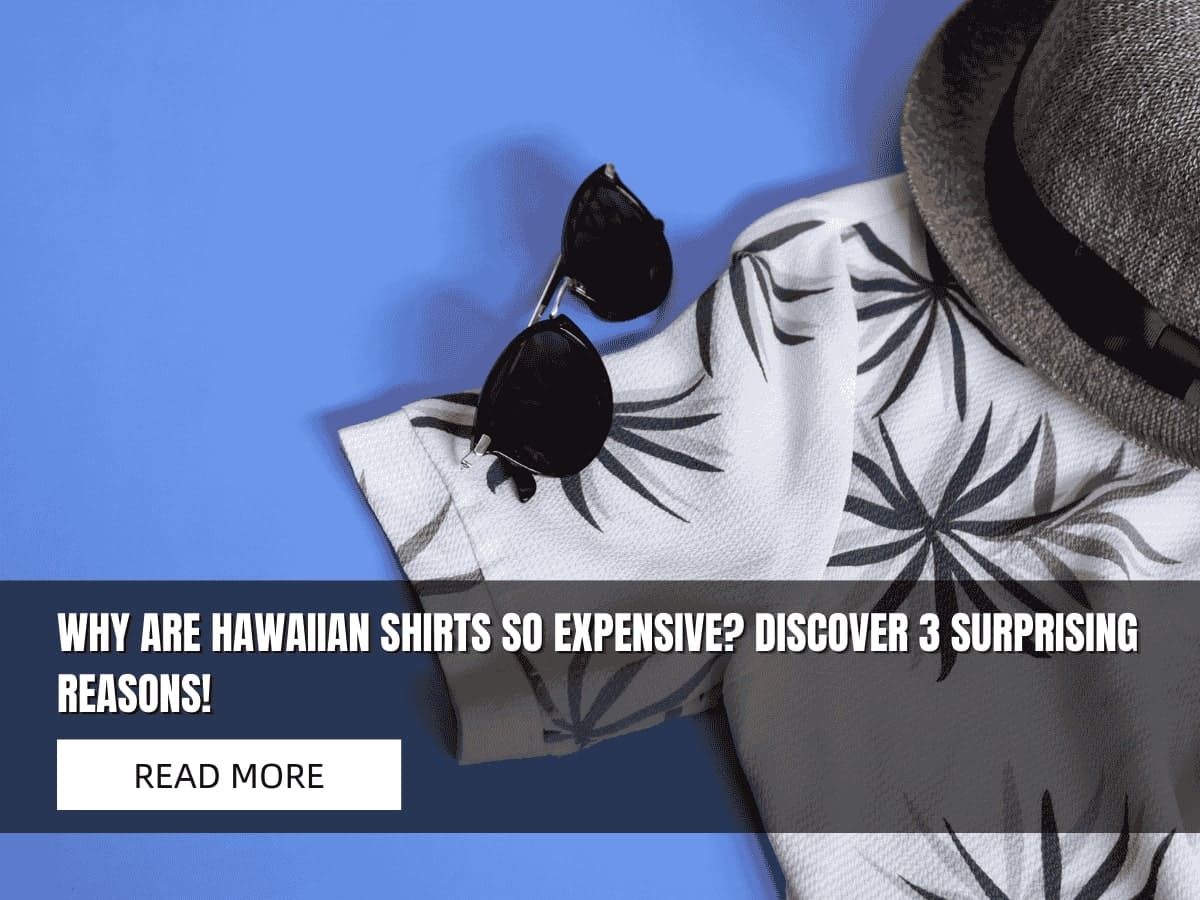
Why are some Hawaiian shirts so expensive? The price can reflect much more than the tropical print. Fabric quality, printing method, garment construction, pattern matching, artwork, production scale, manufacturing location and brand positioning can all affect what a Hawaiian shirt costs.
At the same time, a high price does not automatically mean a better shirt. Modern Hawaiian shirts range from affordable printed shirts to premium Aloha shirts and rare vintage pieces, and those categories should not be compared as if they were the same product.
Below, we break down what actually affects Hawaiian shirt prices, what you may be paying for and how to decide whether a more expensive shirt is worth it.
Why Are Hawaiian Shirts So Expensive?
Some Hawaiian shirts cost more because they use higher-cost fabrics, more involved printing and construction methods, original artwork, smaller production runs or more expensive manufacturing processes.
Seven factors commonly influence the final price:
- Fabric and material quality
- Printing method
- Garment construction
- Print and pattern alignment
- Artwork and design development
- Production scale and manufacturing
- Brand positioning and distribution
Not every expensive Hawaiian shirt includes all seven. Likewise, an affordable shirt can still offer good print quality, comfortable fabric and durable construction.
1. Fabric and Material Quality
Fabric is one of the first factors that can influence the cost of a Hawaiian shirt.
Hawaiian and Aloha shirts can be made from rayon, cotton, polyester, silk, linen and various blends. Each material has different costs, performance characteristics and manufacturing requirements.
Rayon
Rayon is strongly associated with the soft, fluid drape of many classic Aloha shirts. Different rayon fabrics vary significantly in weight, weave, finish and quality, so the fiber name alone does not determine whether a shirt is premium.
Cotton
Cotton can range from inexpensive basic fabric to higher-quality specialty weaves. Fabric weight, yarn quality, finishing and print process all affect the final cost.
Polyester and Polyester Blends
Polyester is widely used for modern all-over printed Hawaiian shirts because it can provide durability, easy care and strong color reproduction.
Polyester should not automatically be interpreted as either cheap or premium. Fabric construction, weight, stretch, finishing and print quality still matter.
Silk and Specialty Fabrics
Silk and some specialty fabrics can increase material and production costs significantly, but they represent only one part of the Hawaiian shirt market.
To compare the advantages and characteristics of different fabrics, read our guide to what Hawaiian shirts are made of.
2. Printing Method
The tropical artwork may look like the most obvious part of a Hawaiian shirt, but getting that artwork onto fabric can involve very different production methods.
Depending on the product, manufacturers may use screen printing, digital textile printing, sublimation or other textile-printing processes.
All-Over Printing
For modern Hawaiian shirts with artwork covering most or all of the garment, the print must be produced across fabric panels before or during garment manufacturing.
The quality of the source artwork, printing equipment, color management and fabric can all affect the final appearance.
Color and Detail
Complex artwork with many colors does not automatically make a shirt expensive, especially with modern digital production methods. However, achieving clean lines, consistent color and good print reproduction still requires appropriate artwork, materials and production controls.
Reverse Prints
Some traditional-style Aloha shirts use reverse-print construction, where the reverse side of the printed fabric faces outward to create a softer, more muted appearance.
This is a design and construction characteristic rather than proof that a shirt is automatically more valuable.
3. Garment Construction
Two Hawaiian shirts can use similar-looking prints and still differ substantially in construction.
Factors that may affect manufacturing cost include:
- Cutting accuracy
- Seam construction
- Collar construction
- Button quality
- Hem finishing
- Pocket construction when included
- Quality-control requirements
A shirt that looks good in a product photo can still feel very different when worn, so construction should be evaluated alongside artwork.
4. Pattern Matching Can Increase Production Complexity
Pattern matching is one of the most interesting construction details found on some higher-quality printed shirts.
On a carefully constructed shirt, the artwork may align across areas such as the front opening or chest pocket. Instead of looking like unrelated pieces of printed fabric sewn together, the pattern appears more continuous.
Why Does Pattern Matching Matter?
Matching a large print can require more deliberate placement when cutting individual garment panels. Depending on the design and production method, this can also require additional fabric or reduce cutting efficiency.
That extra complexity can contribute to manufacturing cost.
However, not every Hawaiian shirt is intended to have perfectly matched artwork. All-over prints, small repeating patterns and some modern designs may not require the same type of alignment.
5. Original Artwork and Design Development
A Hawaiian shirt is also a printed design product.
Creating original artwork requires design work before manufacturing begins. Depending on the brand, that may include:
- Illustration
- Pattern development
- Repeat construction
- Color development
- Print testing
- Garment placement
- Sampling and revision
A brand producing original patterns therefore has design-development costs that are separate from fabric and sewing.
Does a More Detailed Print Always Cost More?
No.
Modern printing technology makes it possible to reproduce complex artwork efficiently. The amount of visual detail alone is not a reliable way to determine how expensive a shirt should be.
Originality, production method, fabric and construction matter more than simply counting colors or elements in the print.
6. Production Scale and Manufacturing
Where and how a shirt is manufactured can also affect its retail price.
Small Production Runs
Smaller production runs may have higher per-unit costs because setup, sampling, design and other fixed costs are spread across fewer garments.
Larger Production Runs
Large-scale production can reduce some per-unit costs through manufacturing efficiency and purchasing volume.
However, production scale alone does not determine quality. Large manufacturers can produce high-quality garments, while small-batch products can vary significantly.
Manufacturing Location
Labor costs, facility costs, logistics, regulations, production expertise and supply chains vary between manufacturing locations.
For more information about production origins, read where Hawaiian shirts are made.
7. Brand, Distribution and Retail Positioning
Part of a shirt’s retail price can come from the business around the product rather than the garment itself.
Retail prices can include costs associated with:
- Brand development
- Marketing
- Photography
- Packaging
- Warehousing
- Retail operations
- Customer service
- Shipping and logistics
- Wholesale and retailer margins
Established brands may also charge more because customers value their design identity, history or reputation.
That does not mean every higher-priced brand offers proportionally better materials or construction. Price and quality are related in some cases, but they are not the same measurement.
If you are comparing manufacturers and styles, see our guide to Hawaiian shirt brands.
Why Are Vintage Hawaiian Shirts So Expensive?
Vintage Hawaiian shirts are a different market from ordinary new Hawaiian shirts.
Some vintage Aloha shirts can command high prices because collectors value factors such as:
- Age
- Rarity
- Condition
- Manufacturer or label
- Print desirability
- Historical interest
- Documented provenance
A rare collectible shirt should therefore not be used as the benchmark for what a modern Hawaiian shirt is supposed to cost.
Does Vintage Mean Valuable?
No.
An older shirt is not automatically rare, desirable or valuable. Condition, authenticity, label, print, demand and provenance can all affect the collector market.
Likewise, a high asking price does not prove that a vintage shirt will actually sell for that amount.
Are Hawaiian Shirts More Expensive If They Are Made in Hawaii?
They can be, but manufacturing location is only one factor.
Products made in Hawaii may operate with different labor, facility, supply-chain and production costs than shirts manufactured elsewhere. Brand heritage and smaller production volumes can also influence price.
However, “Made in Hawaii” should not be treated as a universal guarantee of quality, just as manufacturing elsewhere does not automatically indicate poor quality.
Evaluate the actual fabric, construction, print, fit and manufacturer.
How Much Should a Hawaiian Shirt Cost?
There is no single correct price for a Hawaiian shirt because the category includes everything from inexpensive mass-market shirts to premium Aloha wear and collectible vintage garments.
Instead of looking for one universal price, compare products within the same category.
| Category | What Usually Affects Price |
|---|---|
| Affordable Modern Shirt | Efficient production, synthetic or blended fabric, larger-scale manufacturing |
| Mid-Range Hawaiian Shirt | Fabric, print quality, construction, design and brand |
| Premium Aloha Shirt | Higher-cost materials, construction, original designs, smaller production or brand heritage |
| Vintage Collectible | Rarity, age, condition, label, print and collector demand |
These categories are more useful than assuming there is one price threshold that separates “good” and “bad” Hawaiian shirts.
Does an Expensive Hawaiian Shirt Last Longer?
Not necessarily.
Price alone cannot predict garment lifespan. Durability depends on:
- Fabric
- Construction
- Print method
- Frequency of wear
- Washing and drying
- Storage
- Exposure to heat, sunlight and abrasion
A well-cared-for affordable shirt may last longer than an expensive garment that is repeatedly washed or dried incorrectly.
See our Hawaiian shirt care guide for washing, drying and storage advice.
Are Expensive Hawaiian Shirts Worth It?
Sometimes, but the answer depends on what you value.
A more expensive Hawaiian shirt may be worth considering when the higher price corresponds to features you actually care about, such as a particular fabric, better construction, original artwork, manufacturing origin or brand heritage.
Paying more makes less sense when the only noticeable difference is branding or when the product does not provide clear information about materials and construction.
When Paying More May Make Sense
- You prefer a specific higher-cost fabric.
- The construction quality is visibly better.
- You value original or distinctive artwork.
- The manufacturer provides detailed product information.
- You specifically want locally or small-batch produced clothing.
- You are buying a legitimate collectible vintage shirt.
When an Affordable Shirt May Be Better
- You want a shirt primarily for vacations or occasional events.
- You prioritize easy-care fabric.
- You want a specific modern print rather than heritage construction.
- The affordable product already provides the fit and quality you need.
How to Tell If a Hawaiian Shirt Is Good Quality
Instead of judging quality from price alone, examine the product itself.
Check the Fabric Composition
Look for specific fiber information rather than vague descriptions such as “premium material.”
Look at the Print
Check whether lines, colors and small details appear clean and intentional.
Examine the Construction
Look at seams, collar shape, hems, buttons and other finishing details.
Check Pattern Placement
For designs where pattern alignment matters, examine the front opening and pocket if the shirt has one.
Read the Size Chart
A high-quality shirt that does not fit properly is still the wrong shirt for you.
Check Care Instructions
Clear care instructions help you understand how the fabric should be maintained.
Affordable vs Expensive Hawaiian Shirts
Price does not need to determine whether you can enjoy the style.
Modern textile printing allows brands to produce detailed Hawaiian shirt artwork at a range of price points.
The important question is not:
“Is the most expensive Hawaiian shirt the best?”
Instead ask:
“Does this shirt provide the fabric, print, construction, fit and design I want for the price?”
That makes comparisons much more useful.
What Should You Look for Before Buying a Hawaiian Shirt?
Before purchasing, check:
- Fabric: What is the shirt actually made from?
- Fit: Does the brand provide garment measurements?
- Print: Does the artwork suit where you plan to wear it?
- Construction: Are important garment details clearly shown?
- Care: Are washing instructions practical for you?
- Manufacturing: Does origin matter to your purchase decision?
- Price: Are you paying for features you actually value?
Hawaiian Shirt Price FAQs
Why do some Hawaiian shirts cost over $100?
Higher-priced shirts may use more expensive fabrics, smaller production runs, original artwork, more involved construction or premium brand positioning. The exact reason varies by product.
Why are vintage Hawaiian shirts expensive?
Some vintage shirts are collectible because of rarity, age, condition, label, print or historical interest. Not every vintage Hawaiian shirt is valuable.
Are Hawaiian shirts expensive because of the fabric?
Fabric can contribute to price, but it is only one factor. Printing, construction, design, manufacturing, distribution and brand positioning can also affect retail cost.
Are rayon Hawaiian shirts more expensive?
Some are, but rayon itself does not automatically make a shirt expensive. Rayon fabrics vary in quality, weight, weave and finishing.
Are polyester Hawaiian shirts cheap?
Not necessarily. Polyester is available in many constructions and quality levels. Print quality, fabric weight, stretch, finishing and garment construction still matter.
Are Hawaiian shirts made in Hawaii more expensive?
They may be because of production scale, labor, logistics, brand heritage and other manufacturing factors, but location alone does not determine quality or price.
Is an expensive Hawaiian shirt always better?
No. A higher retail price can reflect materials and construction, but it can also reflect branding, distribution and positioning. Evaluate the actual product rather than using price as the only quality signal.
Is it worth buying an expensive Hawaiian shirt?
It can be if you value the specific fabric, construction, artwork, manufacturing origin or brand. If those features do not matter to you, a well-made affordable shirt may provide better value.
Finding the Right Hawaiian Shirt for Your Budget
Hawaiian shirts can be inexpensive, premium or highly collectible because the category covers very different products.
Instead of assuming that a high price automatically means better quality, compare fabric, print, construction, fit and design. The best value is the shirt that provides the features you actually want at a price that makes sense for you.
If you are shopping for a modern printed shirt, browse Tapa Aloha Shirt’s Hawaiian Shirts collection to compare available designs and styles.
You can also learn more about Hawaiian shirt materials, where Hawaiian shirts are made and Hawaiian shirt brands before choosing the right shirt for you.